

Books<Youtube?
While I agree with the sentiment that attention spans are dwindling and people are too distracted by consumerism, I suspect there is a bit of boomer doom sprinkled in.
Yes, people are not reading as much. They are watching tv, or going out to drink, or working on their next side hustle, but was this ever different? People have been distracted and refuse to learn since distractions were available.
We so easily forget the progress we have made. Look at YouTube! It's a free resource with nearly unlimited useful information. Need to fix your washer? YouTube. Need to know how to cook something? YouTube. yes, I can read a cookbook or instruction manual, but being able to see what is going on is a huge boost to people's ability to accomplish the task.
Yes, reading is dying, but maybe it's not only a bad thing.
Source: https://www.thefp.com/p/niall-ferguson-without-books-we-will-be-barbarians?amp%3Butm_medium=organic-social&%3Butm_source=twitter&https%3A%2F%2Fwww.thefp.com%2Fsubscribe=
Apple Intelligence…
Where has apple been in the ai race? While Google has arguably advanced farther than anyone else controlling the entire ai stack from custom hardware to its own models, apple not only has fallen behind with Siri, they don't have any fill scale hardware or even a competing model; instead relying on chat gpt when things get hard.
Where is the apple that shook up the compute works with m1 apple silicon? Where is the apple that dominates chip design, power efficiency, and raw performance? Apple seems to be in a prime position to dominate, yet they don't seem to have any roadmap for success.
Source: https://www.cnbc.com/amp/2025/12/01/apple-ai.html

AI in Education
It's great to see educators embrace technology. instead of having students use ai to complete work that was already arguably meaningless, have students with in tandem with ai to be more prepared for the job market they're will experience.
Source: https://www.businessinsider.com/uneasy-time-to-be-a-computer-science-student-at-stanford-2025-11

Smartphone 2?
hot take, but I don't think anyone knows what the smartphone replacement looks like. there is so much new technology coming out that any hardware bets that aren't focused on better compute just seem like a poor market read.
is it going to be ar headsets like the vision pro? vr glasses like the meta display? or Chinese contact lenses that give you night vision. saas might be last boom's darling, but it won't be going away anytime soon as the easiest and most effective to scale. the real benefit of ai is that more people are willing to look towards computers to solve a problem, but those problems are often inefficient to use AI for.
Source: https://www.techspot.com/news/110382-openai-confirmed-first-hardware-prototype-built-jony.html

Startups and Power Laws
Most startups are a failure, the reason vc is interested in funding them is that a power law controlled unicorn can make up for the losses of the rest of the failures.
The interesting part is that power laws apply to recessions as well. It seems we are due for a good ol fashioned recession to clear out all the bloat. AI might not be a great investment, but it will be a great tool that will shape the future.
Source: https://www.businessinsider.com/ai-boom-huge-winners-wipe-out-overhyped-startups-vc-investor-2025-11
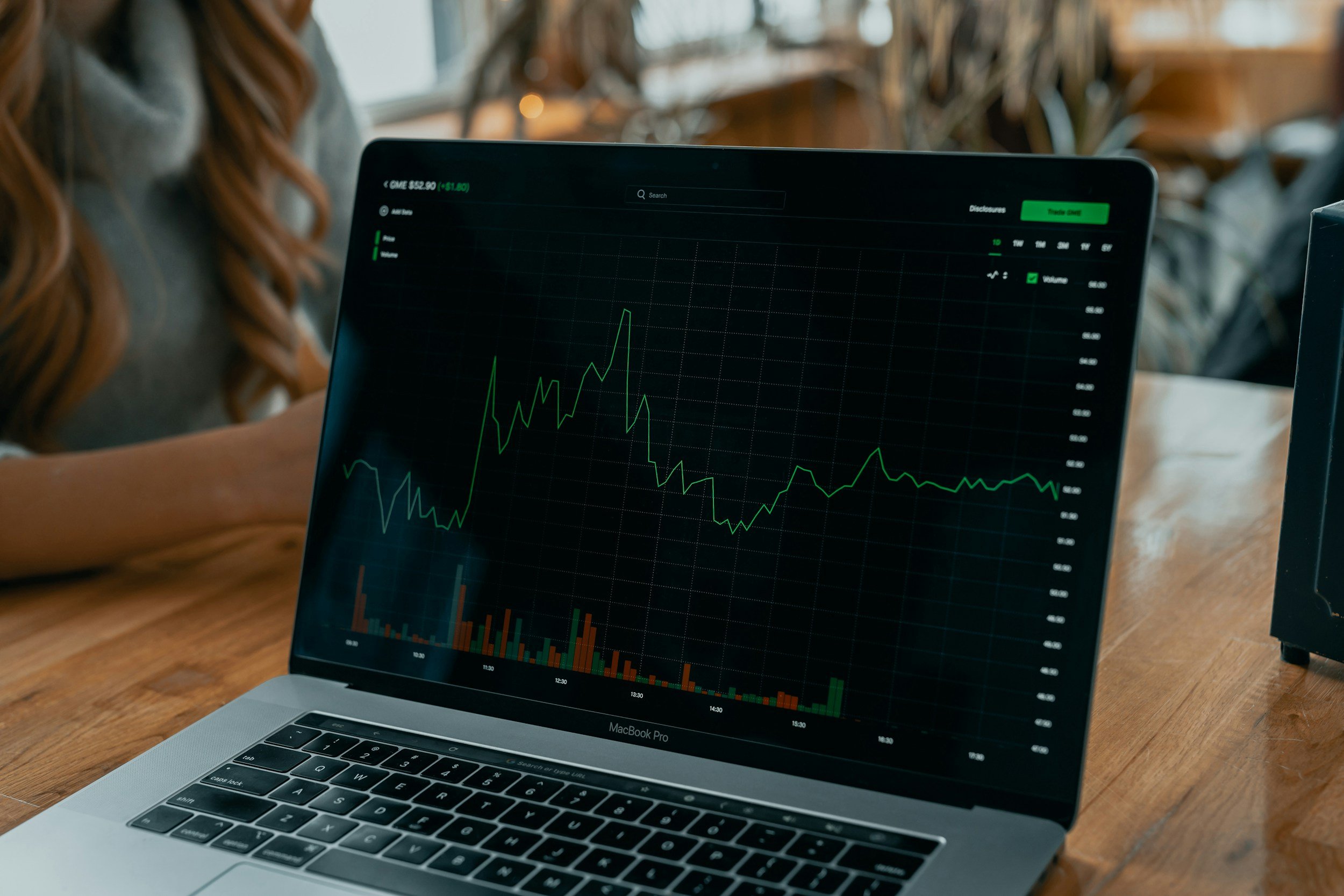
Start of Econ Project
Some of my favorite conversations are with other generalists: people who have a bit of knowledge in a lot of areas. Discussions can start out debating the ethics of an area of law, and descend into the economics of a billion dollar plastic fork.
AI is a fantastic generalist. With the right prompting techniques, you can expand ideas into fleshed out papers. Yes, I will need to go back and correct this, but in researching the citations, I will learn more about the topic in a streamlined and cohesive way that was exactly on point with the ideas I wanted to explore.
An instant draft with manual revision is the roadmap of the forseeable future, but people often overlook the learning that is done along the way. Sometimes things are not lazier, they are better.
I have included the first few sections of the 5 minute draft, if you'd like to see the rest, feel free to reach out. I'd love to discuss:)
-Money as priced claims on expected future impact-
This paper develops a regime-aware framework that reframes money as priced claims on expected future impact. It layers production theory, human capital, and cooperation over institutional trust and expectations to create a practical lens for underwriting, investing, and workforce design. The framework embraces probabilistic, hybrid forecasting rather than deterministic explanations for inflation or economic collapses.
Definitions, scope, and motivating examples
Core definition and contrast with standard views
- **Definition:** Money is a present price for a future-impact claim—the discounted, risk-adjusted expectation of how capital, labor, and institutions jointly change states of the world over time.
- **Contrast:** Traditional accounts emphasize money as a medium of exchange, store of value, and unit of account supported by trust and legal regimes. This framework reframes money’s price as a function of impact expectations layered on institutional credibility rather than treating trust as sufficient.
### Motivating examples
- **Tourism in high-cost geographies:** High fixed costs (mortgages, scarcity) raise required margins; sectors with high markups and demand elasticity become the equilibrium use, often catalyzed by public co-investment and agglomeration effects. Price reflects expected future impact (footfall, spend) conditioned on regime quality.
- **Diamond rings and symbolic goods:** Prices capitalize expected social impact (commitment signaling, status recognition) rather than manufacturing cost. Money prices the durable social effects recognized by institutions and norms, not mere physical utility.

No One is Unique
One of the most frustrating experiences of my philosophical academic career was learning that I'm not special. Every idea I've had, someone else already contemplated decades or centuries ago. Why would I be the first one to contemplate ideas that are not at the bleeding edge of discovery and human understanding?
The truth is, people have had a long time to consider a lot of things, so the odds of making anything truly unique is rather low. I don't agree that uniqueness or originality should be a criteria for judging models since it is not only irrelevant, it's nearly impossible! Why would you want to reinvent the wheel when it's going to cost you more time and money to figure out the other problems you'll run into?
Source: https://www.psypost.org/a-mathematical-ceiling-limits-generative-ai-to-amateur-level-creativity/

Self Reflecting: Sadly Uncommon for People and AI
It's hilarious to see the parallels between people and ai. A new paper examines how ai is quite bad at determining what it's beliefs are, changing them, and then applying those beliefs, yet are people any better? While studies show that 95% of people think that they are self aware, only 10-15% actually are.
Why are we surprised that ai doesn't know what it believes and can't change it, if humans (which ai is based off of) can't do that either!
I'm very excited to see the research that shows how to convince ai, maybe we will be able to finally convince people!
Source: https://arxiv.org/pdf/2511.13240

Nuclear AI
Another underrated benefit of this AI boom is that it's finally putting more focus on infrastructure. Microsoft already has a contract for a nuclear fusion power plant in 2028. whether or not they are able to get their reactor (on time or at all), there is finally money behind fusion research, and more money going into general electrical infrastructure.
Just stop passing the electric bill onto non related residents...
Source: https://www.forbes.com/sites/christopherhelman/2025/11/21/how-ai-is-ushering-in-a-new-nuclear-age/
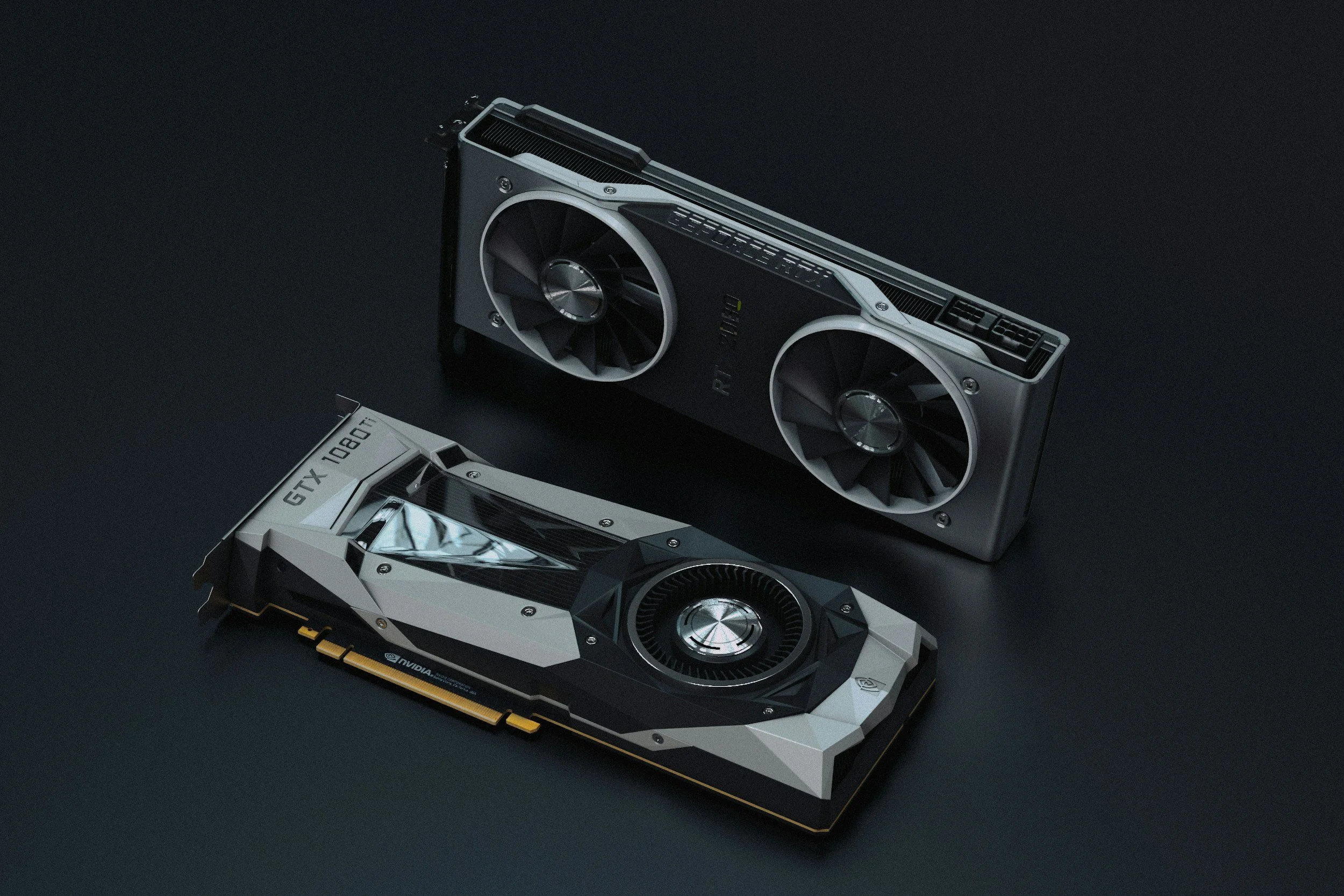
Don’t Buy Hardware
I've seen a lot of big bets about ai hardware, but I can't disagree enough. AI is in it's early Uber stage, vc money is being pumped in to attract users and beat competition. Buying hardware would be like taking a taxi, why not let vc pay for part of your ride?
As ai changes, so to does the ideal hardware to run it. When hardware is at a premium, and most AI startups lose money on compute, why would I invest when it will depreciate in 3 or so years? (while other companies are playing funny financials to extend depreciation out to 5-7 years to make cards more valuable to investors, Amazon recently lowered the target from 6 years down to 5 years).
Source: https://www.technologyreview.com/2025/11/19/1128119/quantum-physicists-compress-and-deconsor-deepseekr1/amp/
Data or Evolution?
While it's exciting to see the amount of data required to train a model shrink, I wonder if people have the right framework for training. Instead of looking at training as all the examples it takes a bot to learn a task, it might be more accurate to view training as evolving the brain of the bot. If we take the metaphor of the brain as the hardware for ai, training is not having a bot learn how to do a task it is already biologically programmed to do. IT IS learning what structures it needs to compute the problem. Imagine trying to see without the occipital lobe.

A New Branch of Science
AI is such an exciting field. This is the first time that humans get to experiment with what makes intelligence tick. I've long held that philosophy guides science, but now the tools to experiment with intelligence have arrived so it's time to stop talking about it, and start figuring it out!
This paper reminds me of the anatomy of the brain and how it contains different sections for various areas of compute such as sight. Modern chip design seems to mirror this approach with general compute supplemented with asic like dedicated hardware for specific tasks.
Source: https://arxiv.org/pdf/2511.06344

Infrastructure: Still a Good Investment?
In the past, infrastructure was an investment into the local population. Highways and train stations allowed cities to grow and towns to prosper, and even modern airports do the same thing to many destinations.
But what will ai data centers do? It almost reminds me of Dollar General. Whenever they move into a new area, it pushes out local business and the money that would have stayed within the community gets siphoned out to uninterested aliens.
Will ai prop up local communities, or will it turn into the new manufacturing where the cheapest bid usually wins?
Source: https://www.youtube.com/watch?v=IQoqtn2RquI

Minimum Connections, Maximum AI
I think that the ideas from this video about connections could be a fantastic way to layer knowledge bases for ai. Someone was able to create massive databases for agentic ai without hallucinations by cleverly segmenting which data the ai had access to for each task with knowledge based gates in n8n. A few random or strategically placed pathways into other knowledge bases could massively expand capabilities while keeping the benefits of both intact. High accuracy and low hallucinations with small knowledge bases, and high potential for higher level thinking and agent layering.
I can't wait to try this out!
Source: https://www.youtube.com/watch?v=CYlon2tvywA

Is AI Unreliable Compared to the Competition?
In a world of everyone accusing AI of being unreliable, I wanted to take the time to talk about the competition.
Below is an article written by a Stanford grad who even attended a class on the subject matter. Yet their analysis misses a fundamental idea of the topic itself: randomness does not exist in computers that you and I will use, it can't.
Any discussions about algorithms being used to generate random numbers is moot as those are only pseudo-random number generators. If you know the initial value, or the seed, you can calculate the output. The only known truly random processes humans have observed are natural phenomena such as radioactive decay.
Similarly, ai is deterministic as most are calculating the gradient descent to determine the most likely word that should appear next. While the output might change, that is not what random means.
Yes, ai is still not 100% reliable, but frankly neither are people. Even a source from an ivy league graduate has noticable errors that impact the results he presents. Don't just check the work of ai, fact check all of the information you receive.
Modern AI requires that you understand the field you are using it for, you should look at ai like an overly enthusiastic intern who is extraordinarily fast. Aai can speed up your workflow; engineers, lawyers, and even customer service are leveraging ai to do better work faster. Do you plan on being left behind, or will you ride the rising tide to new heights?
Source: https://towardsdatascience.com/llms-are-randomized-algorithms/

Why Models Hallucinate
This might also have implications outside of new models. Including training data multiple times for an output to increase the likelihood it catches the correct answer might be a decent strategy. Hopefully the files won't get too big and cause other issues, but for generating a timeline for instance, having multiple copies of medical charts might increase accuracy without additional time or resources.
Assuming that the increased size fits within the token limit so that you do not run into other issues... (here's hoping token limits will be a think of the past soon! Maybe the trillions in infrastructure will help:/)
Source: https://cdn.openai.com/pdf/d04913be-3f6f-4d2b-b283-ff432ef4aaa5/why-language-models-hallucinate.pdf

Agents vs Models
I have found that using advanced agentic like prompts directly into GPT5 over 4o agent mode in Copilot shows a dramatic difference in the quality of the output. In my workflow, it was able to generate numerous litigation discovery documents with extremely few errors that were mostly stylistic or formatting. GPT5 can reference hundreds of pages of documents across multiple providers, and formats in order to complete these tasks.
The experience of using it has almost been a bit spooky. The depth of knowledge that it has on tap is extroadinary, and now the hallucinations are down to a useable level in certain usecases with proper review techniques. I've been developing the new company website and wanted to have a knowledge base for people to go to thats focused on business owners with an action link at the bottom if a reader has that sort of case. But, it was spooky because it must have lifted some of its tips from m&a textbooks and biographies. GPT5 was using ebitda optimazation strategies that I learned working at Peregrine... The research and strategy implications over prior models can not be understated.
It can also read medical charts with extreme accuracy, with some results as low as a 1.6% error rate... that is almost expert level review in seconds which can be scheduled the moment you get access to the records.
Source: https://mpgone.com/is-gpt-5-accurate/

How long does it take?
What an interesting take, AI has long been limited by dataset and compute resources, but now this new framework will help to implement more practical uses for AI.
I'm excited for the day when every employee is a manager of several AI agents. While some expect AI to enable lazy employees, it can also increase productivity to new heights.
Source: https://metr.org/blog/2025-03-19-measuring-ai-ability-to-complete-long-tasks/

Goodhart’s Law and Hiring
It must be difficult to hire people. According to Goodhart's law," When a measure becomes a target, it ceases to be a good measure." With a job even slightly abstracted from direct financial figures, measuring the value a new hire adds in an unfamiliar role would be impossible.
Do you believe in B**lsh*t jobs by David Graeber?

Modernizing the Marketplace: The Case for Buyer Vetting
It's funny how the more things change, the more they stay the same. Even as the world grows ever smaller with technology, people still invest locally. Maybe it's time for a new investment platform that vets buyers financials so that we don't only see small companies available for investment on platforms like bizbuysell.
-Source: https://startupsweek.com/2025/08/10/ai-is-creating-new-billionaires-at-a-record-pace/